
- Starring
- Jack Reynor, Laia Costa, May Calamawy
- Writer
- Lee Cronin
- Director
- Lee Cronin
- Rating
- 18A (Canada), R (United States)
- Running Time
- 134 minutes
- Release Date
- April 17th, 2026
Overall Score
Rating Summary
Not to be confused with the Brendan Fraser franchise of the same name (not including a fourth entry set for an October 2027 release), or the 2017 Tom Cruise film of the same name, Lee Cronin’s The Mummy is a film whose title kind of speaks for itself. With so many Mummy films emerging as of late, the next logical question is what is the point of this one? Set in the recent Evil Dead universe, the film does little to justify itself, starting with a title that will inevitably cause some confusion (despite the fact that it is merely an attempt to distinguish itself from the others) and create undue expectations for audiences. Content wise, it very much brings it as a horror film, following in the footsteps of Cronin’s last effort, 2023’s ‘Evil Dead Rise,’ Taking its time to get going, as the film struggled to figure out what it wanted to be, it works itself up to a chaotic crescendo. The problem with that, however, is the issue of whether or not it is all earned. When it comes to stories like this, they are often bound to be on the sillier side of things, and this one is no different. Simply a means to an end, they are the first element sacrificed for the sake of whatever next gimmick comes along. While the pieces are here, they can’t quite come together in a satisfying enough way.
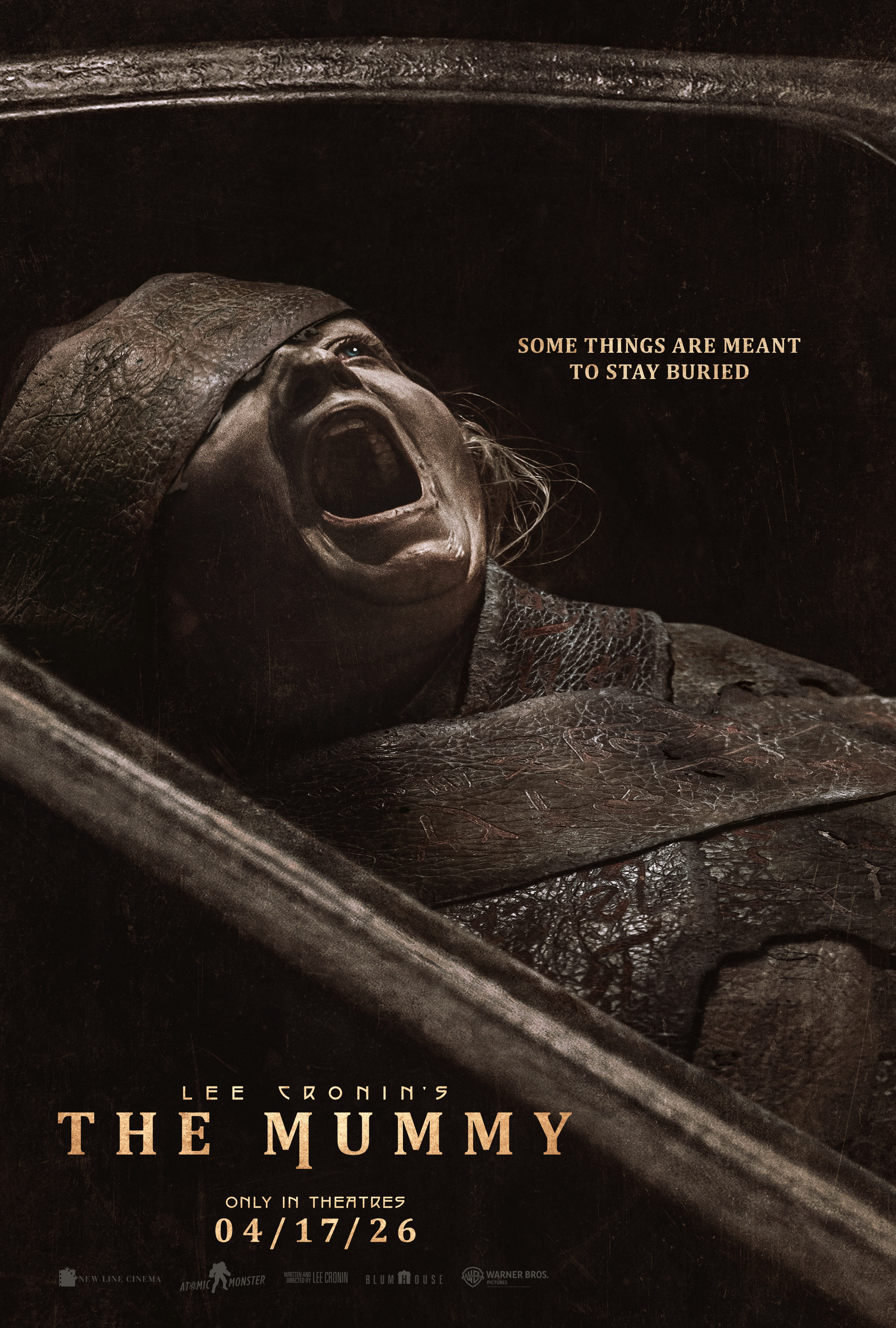
Lee Cronin’s The Mummy is centered around the family of journalist Charlie Cannon (Reynor) who, after losing their youngest daughter Katie (Emily Mitchell, Natalie Grace) goes missing in the desert of Cairo, Egypt, reunites with her eight years later after being found mummified in a recovered sarcophagus. However, Katie is far from the daughter Charlie, and his wife Larissa (Costa), remembered. Little did they know, a moment that they believed would bring their family together turned into an absolute nightmare. Where the film falters is how it handles this moment. Granted, some indecision is almost required in films like this to help advance the plot, but it completely brushes off the evolution of the family dynamic in favor of driving them apart.
As Charlie and Larissa are the major crux of the dysfunction, their other children, their new youngest daughter Maud (Billie Roy), and their son Sebastian (Dean Allen Williams, Shylo Molina), and Larissa’s mother Carmen (Veronica Falcón), were left to pick up the pieces. A tale as old as time, something was clearly wrong with this situation, it’s just a matter of what Charlie and Larissa handled it. Going in different directions, Charlie couldn’t live without knowing what happened to his daughter, so he decided to put his journalist cap back on to try and investigate what happened to Katie. Enlisting the help of Detective Dalia Zaki (Calamawy), an officer at the time of Katie’s disappearance, she worked the Egyptian angle. Meanwhile, Larissa was just happy that she had her daughter back and despite the devolving situation with Katie, she was convinced that she could fix it.
Stuck in a holding pattern, Charlie and Larissa went about their paths and Katie continued to act out in increasingly disturbing ways that became harder to explain away. Regardless of what either had on their minds, having her in the house any longer put them, and their family, at risk. Over the course of the film, that gap began to narrow as Charlie and Dalia’s investigation progressed, and Larissa slowly realized that she was in way over her head. That being said, knowing what happened to Katie was one thing, and stopping her now was another. As she grew powerful, so did her reach, getting a hold of the other children. In the end, something had to give as Katie (or whatever force had taken hold of her) showed her hand, making it a family affair, with the addition of Delia. Giving audiences a crescendo of a climax that will leave many on the edge of their seats, the film just misses the landing. Playing all the tropes and clichés every step of the way, in that sense, the end if fitting and leaves the door open for more, should it come to that.
In spite of its narrative flaws, Lee Cronin’s The Mummy should still be applauded for leaning heavily on practical effects instead of taking the easier way out with CGI. Saving the bulk of that work for the back half to final act of the film, it adds an authenticity that pulls audiences further into the carnage and makes it hit that much harder. Out of those, the makeup work is the easy standout, especially when it comes to the many stages of Katie. Connected by a silly story, they make it at least somewhat bearable. Similarly, the performances also contribute in keeping the film afloat. Making the most out subpar material, Reynor sells the role of of a caring father whose motivations are more relatable. Ultimately, Grace is a scene-stealer in her first feature film role, as Katie. A character that the film could have dialed up even more, her presence and physicality is something audiences will remember long after the credits roll.
Lee Cronin’s The Mummy adds more to the mummy glut with a film that is not so much a mummy movie, but rather a film that happens to have a mummy in it. Either way, the result is a narratively underwhelming horror film whose silly story is propped up by strong practical effects and a scene-stealing child performance.
still courtesy of Warner Bros. Pictures
If you liked this, please read our other reviews here and don’t forget to follow us on Twitter or Instagram or like us on Facebook.

The EIC of the coincidentally-named keithlovesmovies.com. A Canadian who prefers to get out of the cold and into the warmth of a movie theatre.
Discover more from
Subscribe to get the latest posts sent to your email.