

- Starring
- Masahiro Motoki, Masaki Suda, Yuriko Yoshitaka
- Writer
- Kiyoshi Kurosawa
- Director
- Kiyoshi Kurosawa
- Rating
- PG (Canada)
- Running Time
- 147 minutes
- Release Date (US)
- July 31st, 2026 (limited)
- Release Date (CAN)
- August 4th, 2026 (limited)
Overall Score
Rating Summary
Few filmmakers right now shoot as much as Kiyoshi Kurosawa. A master of film, the Japanese filmmaker and professor has thrived in different genres over the past few decades. His 1997 Cure is one of the most praised thrillers in history, showcasing the efficiency of his depiction and the ability to create tension. His prolific oeuvre presents an enormous number of films released in the same year, such as 2024, when he released Chime, Serpent’s Path, and Cloud. Yet, the overall quality of his filmography remains. Known for his horror and brutal crime films. This year, the director presents audiences a novelty. The Samurai and the Prisoner is his first adventure tackling the history of Japan.
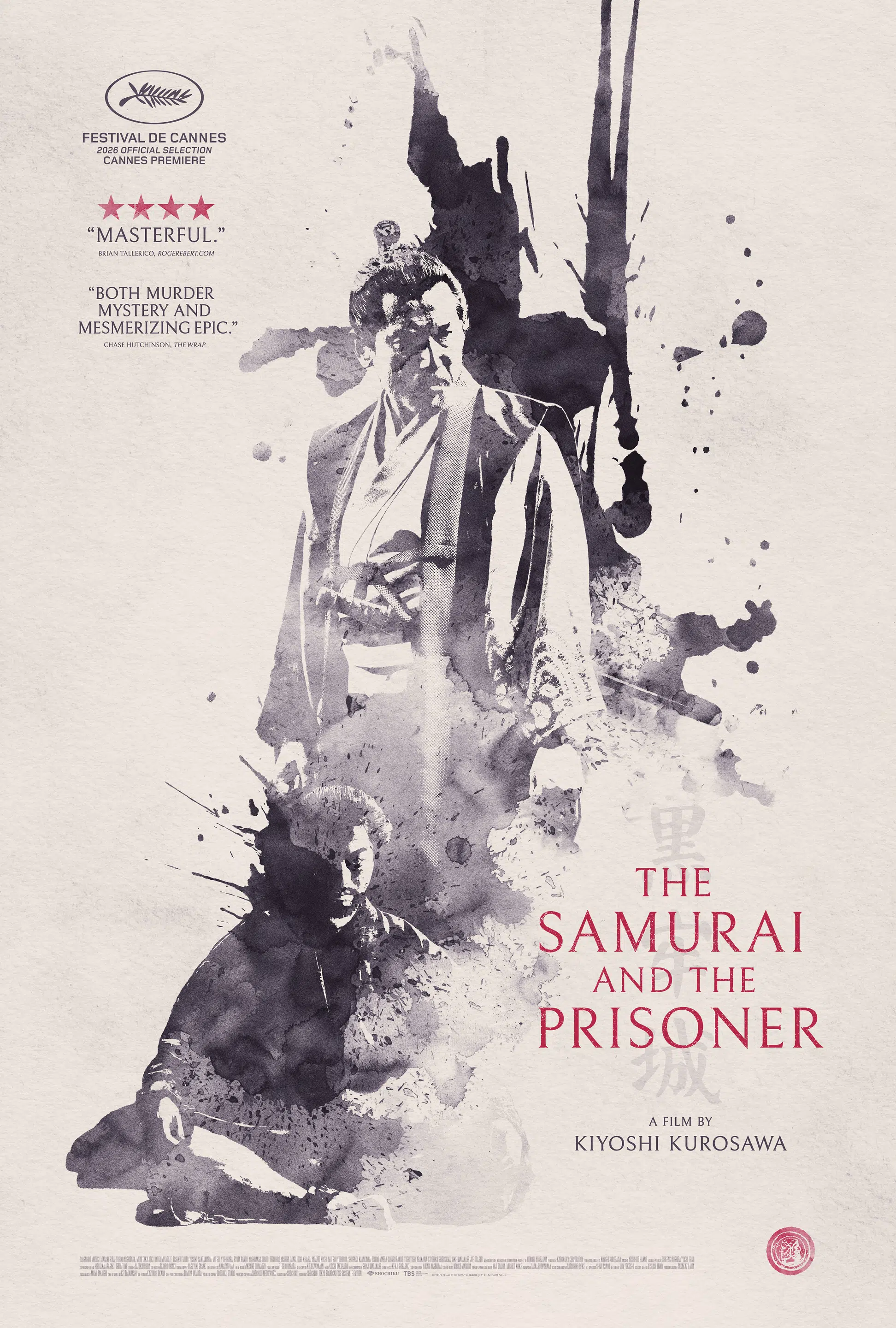
The film tells the story of Araki Murashige (Motoki), a man who decides to confront the powers of the tyrannical Oda Nobunaga (Shingo Bando). Yet, the powerful Oda army is waiting for the moment to attack. Murashige receives help from the man he locked in his basement, Kuroda Kanbei (Suda). From there, the two start working together to protect the Arioka Castle against Oda’s fury. Consequently, Kurosawa’s latest is a psychological film about the battle between two opposing empires in the Azuchi era. As a result, over the course of its two and a half hour runtime, Kurosawa constructs a film that plays with the power dynamic between leader, prisoner, and ongoing danger.
Divided into four seasons, Kurosawa crafts a film that showcases how the castle operates over each quarter. As the blockade becomes increasingly stronger, the samurai’s men are mysteriously murdered; hence, Murashige needs the help of the man he swore to punish. In this sense, it is a film that plays with dilemmas, the opposites who ought to bond to solve those problems. The film is another by Kurosawa, one where he slowly introduces elements, increasing the dramatic aspects of that problem. Even in a different scenario, the film is mostly set in the Arioka castle, and crafted by Tetsuo Harada, a specialist in samurai films. Within the castle, each room is a character that contributes to the mystery of who the traitor is and how Oda is penetrating that blockade.
Ultimately, the central dynamic lies in the relationship between Masahiro Motoki and Masaki Suda, who play contrary men in ideologies and objectives – but eventually become partners. Along those lines, the weakest thread of The Samurai and the Prisoner is how its subtext dries up a bit, which is a fairly surprising and fascinating one. Textually and visually, it reminds us of one of the relationship between Kenichi and Kunio in Cure, although it is not as evil. In this cast, the film brings back a few elements from Kurosawa’s other works, such as Cure, the geography of Cloud, and even the violence of Chime, which starts suddenly before steadily increasing from there. After almost thirty years into a prolific career, he inserts himself into the canon of samurai films, which transformed Japanese directors into legends.
Following plenty of excess through its first two acts, the film’s final act bring some of the best of Kiyoshi Kurosawa’s cinema, like Cloud and Cure, he finishes his works at peak. In the end, The Samurai and the Prisoner might be a new point in Kurosawa’s filmography, but his structures, tricks, and even excesses remain in his Samurai tale.
still courtesy of Janus Films
If you liked this, please read our other reviews here and don’t forget to follow us on Twitter or Instagram or like us on Facebook.

Brazilian film writer. He is also a producer and executive producer for Zariah Filmes. Member of the International Film Society Critics Association (IFSCA), International Documentary Association (IDA), and Gotham and Media Film Institute.
Discover more from
Subscribe to get the latest posts sent to your email.
