

- Writers
- Julian Loyola, Esteban Student
- Director
- Maite Alberdi
- Rating
- R (United States)
- Running Time
- 96 minutes
- Release Date
- August 13th, 2026 (Netflix)
Overall Score
Rating Summary
In recent years, Chilean filmmaker Maite Alberdi has become one of the most brilliant names in non-fiction. Her last two documentaries, El Agente Topo (The Mole Agent) and La Memoria Infinita (The Eternal Memory), earned Academy Award nominations. Both highlight her interest in aging and memory, focusing on the erasure of memories from the mind, either from the passage of time or through illness, such as Alzheimer’s. Here, she returns with a new documentary, Un Hijo Próprio (A Child of My Own), her comeback to the medium following 2024’s El Lugar de la Otra (In Her Place), a narrative feature that adapts the true crime story of popular writer María Carolina Geel.
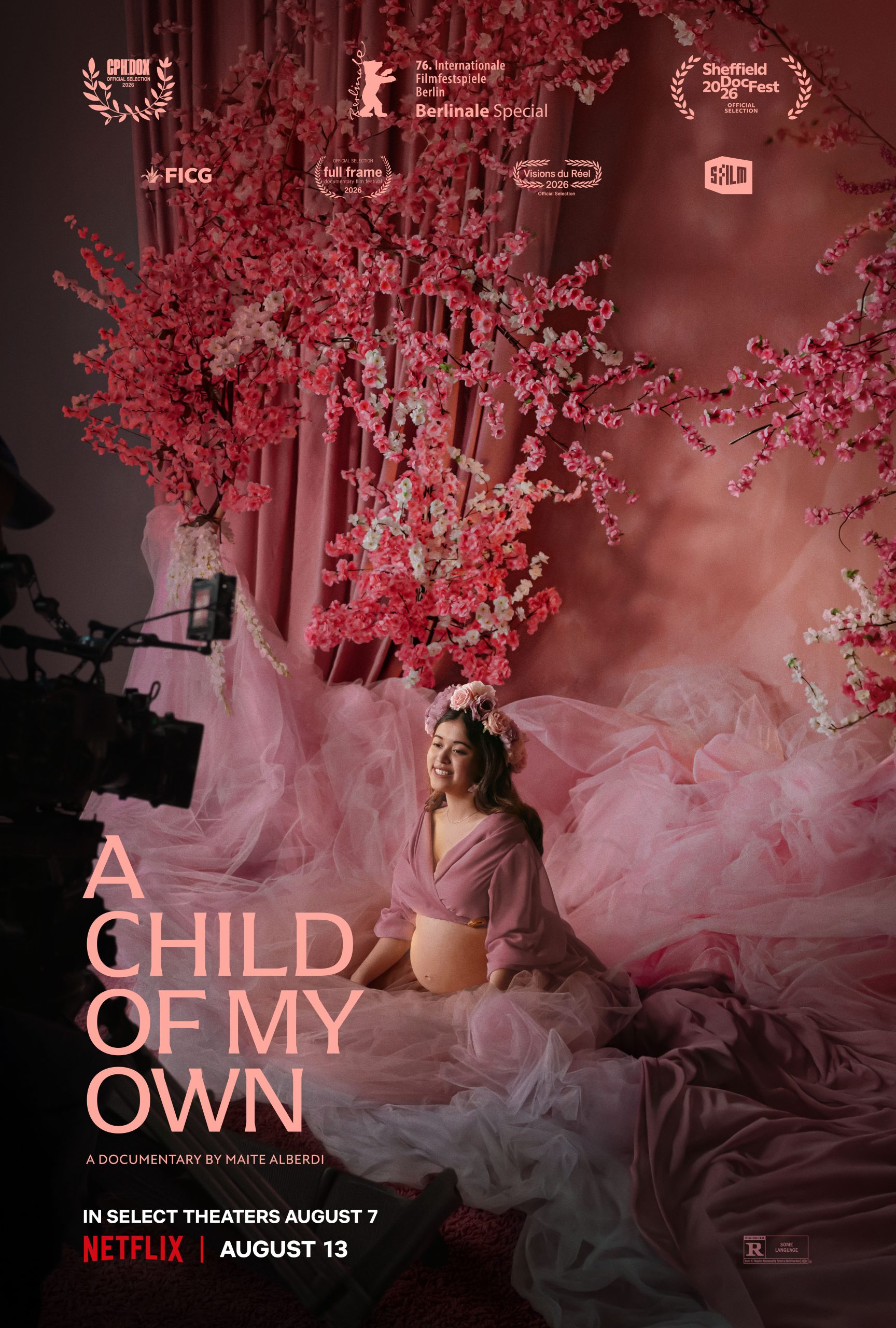
Alberdi’s latest effort mixes the event’s reconstruction, featured in her first fictional film, with the documentary filmmaking that has accompanied her throughout her career. A Child of My Own is centered around a 2009 case in Mexico, where Eleanor Alejandra ‘Ale’ Marin Mendoza (played in the inscenations by Ana Celeste) abducted a baby from a maternity ward. After two miscarriages and due to the heavy societal pressure on her husband’s family, she meets a woman at her job at a hospital, and decides to adopt her baby. However, she does not tell her husband or anyone else; instead, she decides to gain weight and even throw a baby shower to protect her lie. In this sense, the Chilean director uses Ale’s voice as narration to provide context to the fictional elements played by actors.
Consequently, more than half of the film functions as a reenactment. Armando Espitia plays Arturo, the husband, whose will to become a father led to the wife’s desperation. Alberdi constructs her fiction very much like a telenovela, exploring the melodrama and the moral dilemmas of this story. In the context of the film, this proved to be the right choice; the true events are overly reminiscent of Latin traditional soap operas, and Brazilian soap opera Senhora do Destino, which tackles the same themes. Questions about family structure and sanguine connection are present in the TV melodramatic product.
That division is fascinating – Ale providing the background to the event through her version, while the film questions, through its formality, the morals of the case. Thus, the back-end of the project leans toward the archive, showing what has made Alberdi the current master of non-fiction in cinema. The rescue of 2009 Nokia cellphone footage and cranky local news excerpts capture the woman within the enclosed confines of prison. In the end, Ale was sentenced to 13 years in jail for her actions, and the director captures the intimacy of her new home. Her companions grew increasingly fond over her sentence. Completing her stint in prison and leaving at just 39 years, still remained destined to become a mother. Even if morally questionable, Alberdi never puts us against Ale, a woman who took extreme actions to become a mother.
Ultimately, A Child of My Own becomes an exercise of the film’s formality to present a real event. Director Maite Alberdi crafts an intricate documentary through the mixed form, using the colors and artificiality of telenovelas to portray a melodrama without ever abandoning the non-fiction aspects of her film. Through her latest effort, Alberdi further positions herself as a great documentary filmmaker, and one worth keeping an eye on.
still courtesy of Netflix
If you liked this, please read our other reviews here and don’t forget to follow us on Twitter or Instagram or like us on Facebook.

Brazilian film writer. He is also a producer and executive producer for Zariah Filmes. Member of the International Film Society Critics Association (IFSCA), International Documentary Association (IDA), and Gotham and Media Film Institute.
Discover more from
Subscribe to get the latest posts sent to your email.