
- Creator
- Nick Santora
- Rating
- TV-MA
- Running Time
- 400 minutes
- Episodes
- 8
- Channel
- Prime Video
Overall Score
Rating Summary
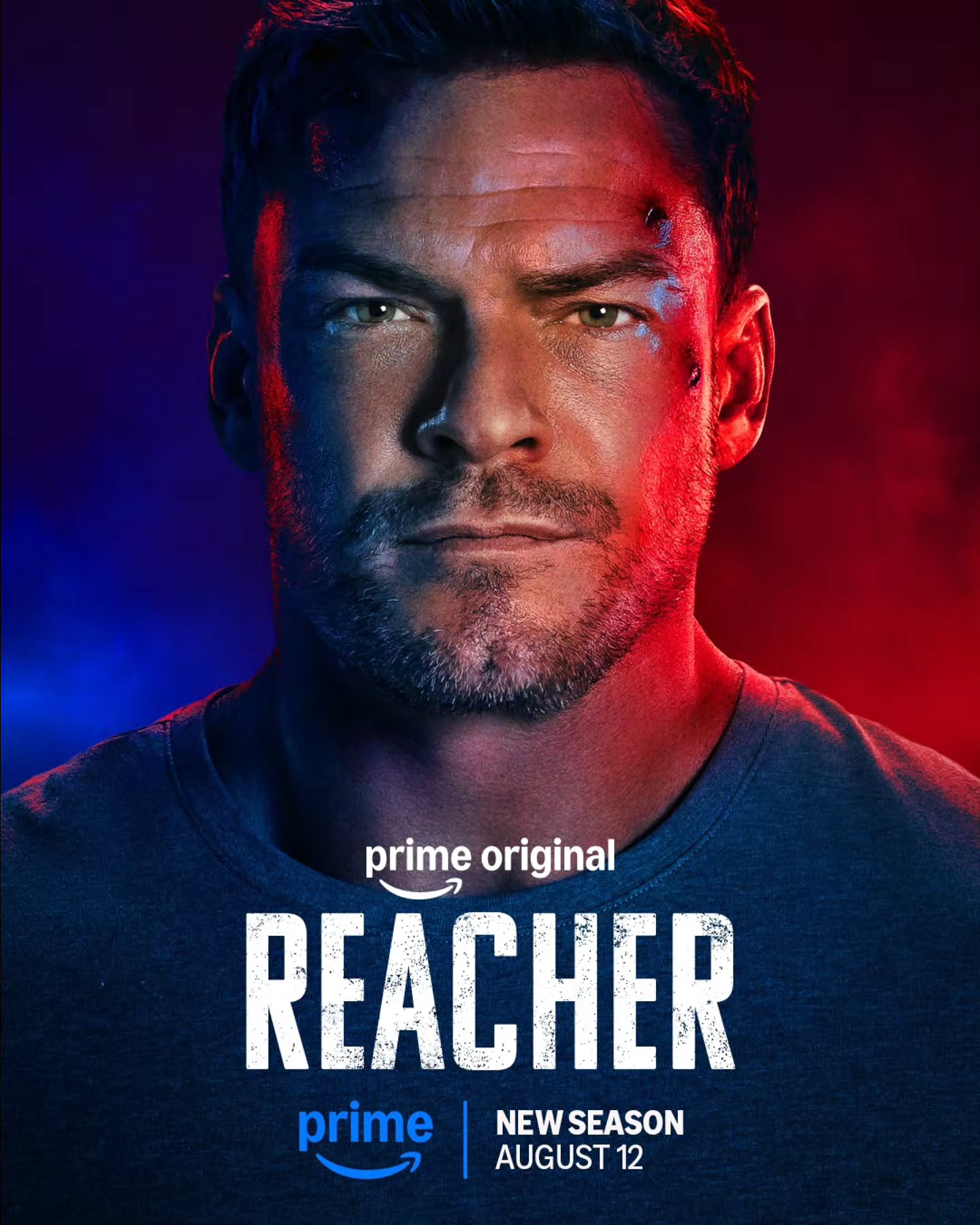
The wait is over, and another season of Reacher is finally here. Wasting no time, the season throws its the titular hero immediately into another mystery, as a key witness to a Pentagon employee’s suicide and their guilt for failing to stop it, quickly turns into a personally motivated mission for answers. Through this labyrinth of misdirection and secrecy, we are introduced to Tamara Green (Sydelle Noel), an officer assigned to the suicide case of Anna Merrick (Karen Kwong-Chip), the Pentagon employee whom Reacher witnessed; Jacob Merrick (Christopher Marquette), Anna’s brother who is just as determined to find answers as Reacher; and Russell Plum (Kevin Weisman), a disgraced journalist hell-bent on exposing the government for covering up secrets to the American people. As they race to solve the mystery of Merrick’s suicide and a disappearing flash drive that potentially holds top-level government secrets that could ruin the lives of multiple people, including potential Presidential candidate, John Sampson (Marc Blucas), Reacher and Co. are also aided by Lila (Agnez Mo) and Amisha Hoth (Anggun), two women who share a past with John Sampson and are looking to expose his potential involvement in a military slaughter of their village several decades ago.
What changes this season’s storytelling approach away from previous ones is by subverting the cliché of focusing on a central villain with a slow-burning march towards a highly kinetic finale, instead opting to use various government agencies as the ever-present threat in each episode to Reacher and his team. The decision to choose this route of consistent multi-level antagonists is both a blessing and a curse because while it creates a feeling of constant dread hanging over the main characters, by the later episodes it becomes increasingly exhausting and, at times, slightly predictable. Even still, for fans of the series so far, it never gets tiring watching Reacher fight his way out of a situation.
Ultimately, the repetitive nature of using these government agencies as formulaic devices began to deteriorate some of the narrative promise as the season progresses, resulting in a predictable nature where Reacher & Co. discover something about the overarching narrative only to be quickly chased away by whatever agency caught up to them at that time, and then after they get away, the cycle quickly begins again in the next episode humorously resulting in the most that Reacher has ever physically run away from something. Again, fans of the series will more than likely not be put off by this because there is an acceptance for a series where they understand the narrative needs to go only so deep before someone needs to be punched in the face. Even more so, what’s exciting about this season is that at no point is Reacher made to feel like he is the smartest person in the room, which is in direct contrast to previous seasons. And so, the exploration of having the main character in the dark, similar to viewers, about what is actually occurring for the majority of the season is a refreshing perspective that is examined.
As you would assume, there is always a big reveal or twist at some point, and this season is no different, placing viewers in a strange place. While there is an acceptance of the depth of the plot in place of watching great action scenes, there is still a simmering disappointment in the reveal because the season does very little to introduce enough external factors to ensure the surprise twist becomes anything but. That is not to say the action suffers. At any moment throughout this season, the action quickly becomes one of the most prominent forces by producing some of the most gruesome fights in the entire series, punctuated by an excellent final fight that might not rival Reacher versus Paulie in season three, but comes close to it. Still, when season four reaches its narrative crescendo, it does so with a muted thud because of the reheated nature of its reveal and resolution. While still engaged and, most importantly, entertained, I still found myself underwhelmed by the direction of the final episodes of season four, ultimately wanting more, but settling for the satisfaction that it was still a good watch from start to finish.
It’s easy to make the argument that season four of Reacher is not the best of the series to date, but it doesn’t have to be. Its plot, while interesting in moments, still disappointingly lacks throughout, and its resolution is simply okay. But where the season shines is how it has Reacher in a place viewers have never seen him before, uncertain. It’s through this lens that the character exposes a new layer of himself while in a state of constant movement, unable to use his intellect and wit to escape a situation, rather relying on his fists, which, in turn, leads to some of the best action of the entire series.
Overall, this season can very quickly hit a point of narrative repetition, but balance is realized through the incredibly memorable action scenes and Alan Ritchson’s impeccable personification of Reacher. In other words, any of the season’s shortcomings quickly melt away whenever Reacher’s fists meet someone’s face. It will satisfy fans looking for solid entertainment and leave them excited for more seasons yet to come alongside what looks to be a similar path in the Neagley spin-off series later this year.
still courtesy of Prime Video
If you liked this, please read our other reviews here and don’t forget to follow us on Twitter or Instagram or like us on Facebook.

Trying my best to get all thoughts about TV and Film out of my head and onto the interweb.
Discover more from
Subscribe to get the latest posts sent to your email.